
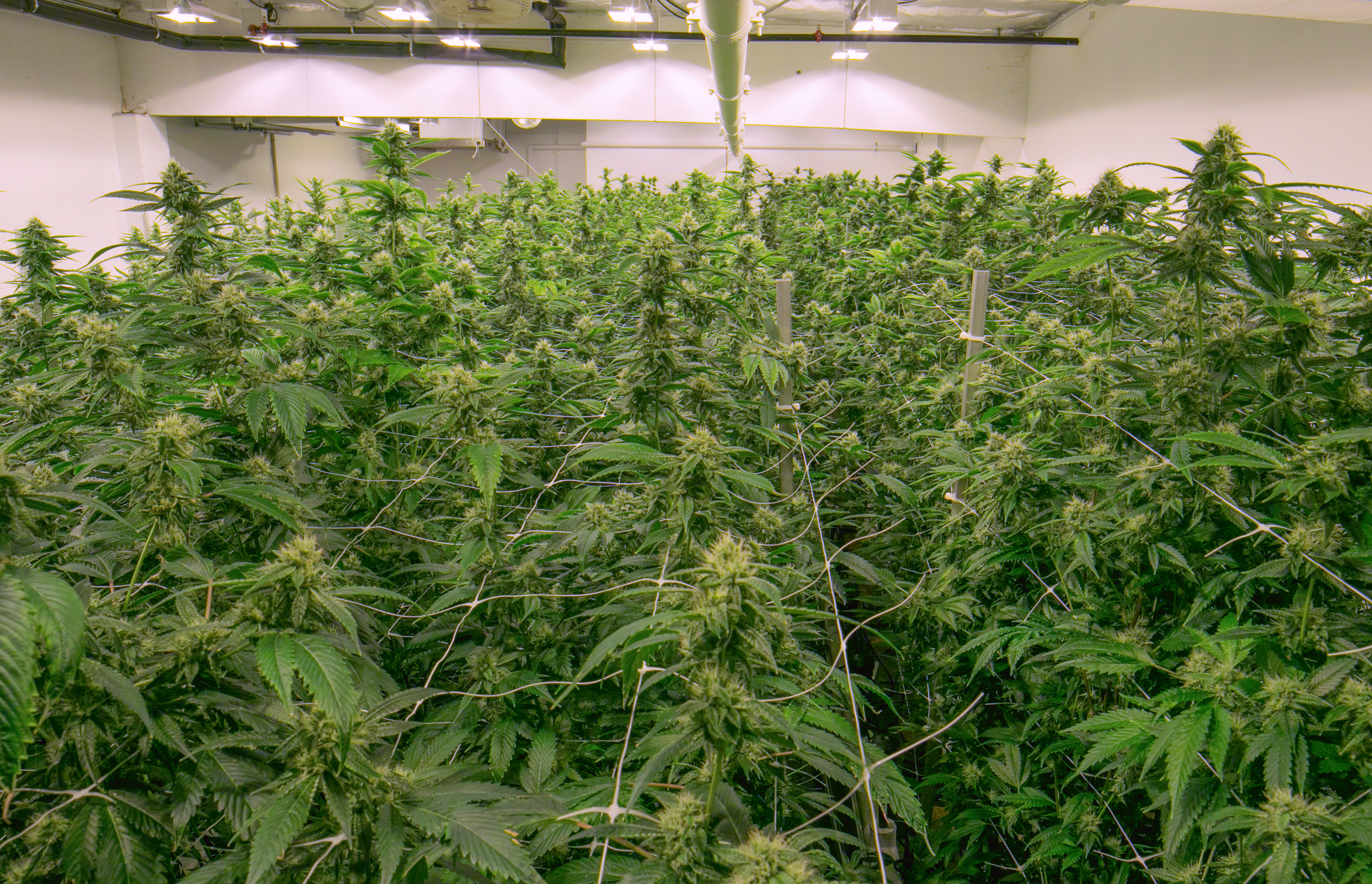
Growing healthy crops indoors requires more than dialing in lighting, nutrients, and climate controls. Even well-designed grow rooms can leave production potential on the table if carbon dioxide levels aren’t properly managed.
As plants consume available CO2, sealed growing environments can become depleted, limiting photosynthesis and reducing the effectiveness of other cultivation inputs. That’s why CO2 enrichment has become a standard practice in commercial cultivation, helping growers support faster development, stronger yields, and more efficient use of their grow room resources.
Below, we’ll explore the benefits of CO2 in grow room environments, recommended CO2 levels, bulk CO2 systems, and how growers can incorporate carbon dioxide into a broader strategy for maximizing production.
The Role of CO2 in Photosynthesis
Photosynthesis is the process that allows plants to convert light into usable energy. During this process, plants combine water, sunlight, and carbon dioxide to produce sugars that fuel growth. Carbon dioxide acts as one of the primary building blocks in this cycle. When adequate CO2 is available, plants can create energy more efficiently. That energy supports everything from root formation and stem growth to flowering and fruit production.
In indoor growing environments, carbon dioxide frequently becomes a limiting factor. Growers may install powerful lighting systems and provide a balanced nutrient program, but plants still need enough CO2 to take advantage of those investments. Once carbon dioxide becomes scarce, photosynthesis slows, reducing the plant’s ability to grow at its full potential.
The relationship between light and carbon dioxide is particularly important. Higher light intensity allows plants to process more carbon dioxide. This is one reason supplemental CO2 is often paired with advanced lighting systems in commercial grow rooms. When these factors work together, plants can devote more energy toward development and production.
Key Benefits of CO2 for Grow Rooms
The benefits of CO2 extend across nearly every stage of plant development, which is why supplemental carbon dioxide has become a common tool in commercial cultivation.
Faster growth is often one of the first advantages that growers notice. With access to additional carbon dioxide, plants can photosynthesize more efficiently, helping accelerate development and shorten production cycles.
Higher yields are another major driver of CO2 adoption. Enhanced photosynthesis supports greater biomass production, allowing crops to produce larger canopies and stronger harvests. For commercial growers, even small gains in output can add up with time.
Beyond growth and yield, supplemental carbon dioxide can help plants perform under more demanding conditions. Crops exposed to elevated CO2 concentrations often tolerate higher temperatures and intense lighting more effectively than those grown under ambient conditions. Many growers also report more uniform development across the grow room, making crop scheduling and production planning easier.
Perhaps most notably, carbon dioxide helps growers get more value from existing investments. Lighting systems, nutrient programs, irrigation equipment, and climate controls all contribute to crop health. When adequate CO2 is available, plants are better positioned to take advantage of those resources and convert them into productive growth.
Optimal CO2 Levels for Indoor Cultivation
Outdoor air typically contains between 400 and 450 parts per million (ppm) of carbon dioxide. While plants can grow successfully at those levels, indoor growers often target higher concentrations. Most commercial operations maintain CO2 levels between 1200 and 1500 ppm in flower rooms and 700-800 in veg rooms. This range provides plants with additional carbon dioxide to support more active photosynthesis and stronger growth.
Target concentrations may vary based on crop type and stage of development. During vegetative growth, plants often have a strong demand for carbon dioxide as they focus on producing foliage and structure. Flowering and fruiting stages may call for adjustments based on the grower’s goals and crop requirements.
Maintaining stable carbon dioxide concentrations is just as vital as reaching a target number. Large fluctuations can reduce efficiency and limit the benefits of supplementation. Monitoring equipment helps growers track conditions and make specific adjustments when necessary.
It’s also important to avoid excessive enrichment. Higher concentrations do not always produce better results. In many cases, overly aggressive dosing increases costs without providing meaningful gains.
Bulk CO2 Systems for Commercial Grow Rooms
Commercial grow operations can consume substantial amounts of carbon dioxide, making a reliable supply important for consistent enrichment. For facilities with high CO2 demand, bulk storage provides a practical alternative to individual tanks, cylinders, or combustion-based systems.
Bulk CO2 systems store larger quantities of carbon dioxide on-site, reducing the frequent cylinder changeouts that can become inconvenient and expensive for large grow operations. They also supply CO2 without introducing the additional heat and moisture associated with burners, helping growers maintain greater control over their growing environment.
When paired with enrichment technology, monitoring equipment, and automated controls, bulk CO2 provides commercial growers with the reliable supply and precise management needed to maintain target concentrations and support productive grow room operations.
Integrating CO2 with Environmental Controls
Carbon dioxide delivers the greatest value when it’s part of a well-managed grow room strategy. Several environmental factors influence how effectively plants can utilize supplemental CO2 and many commercial growers use automated controls to monitor and adjust these variables.
- Lighting: As light intensity increases, plants can process more carbon dioxide and generate more energy through photosynthesis. This is why many commercial growers pair CO2 enrichment with high-performance lighting systems.
- Temperature: Plant metabolism is closely tied to temperature. Elevated carbon dioxide concentrations can help crops perform more efficiently under warmer growing conditions.
- Humidity: Proper humidity supports plant function, transpiration, and nutrient uptake, all of which influence how crops respond to supplemental carbon dioxide.
- Air Circulation: Even distribution matters. Good airflow helps move carbon dioxide throughout the canopy so that all plants have access to the available supply. Poor circulation can create pockets where enrichment is less effective.
Safety Considerations for CO2 Use
When properly managed, carbon dioxide is a safe and effective tool for indoor cultivation. However, like any industrial gas it should be handled responsibly. The concentrations that benefit plants can exceed levels recommended for human occupancy. This makes monitoring equipment an essential part of any enrichment program.
CO2 sensors provide real-time information about conditions within a grow room. Alarm systems can notify personnel if concentrations rise above established thresholds, allowing corrective action to be taken quickly.
Ventilation procedures, routine inspections, and employee training also contribute to a safer workplace. These measures help growers protect both their crops and their teams. Professional system design can further reduce risk by incorporating appropriate safety controls from the beginning.
Why Professional CO2 Solutions Matter
While carbon dioxide enrichment may appear straightforward, achieving reliable results requires more than simply introducing additional CO2 into a room.
Improperly designed systems can create uneven distribution, unnecessary waste, and inconsistent plant response. These challenges can reduce the return on investment and make environmental management more difficult.
Professional solutions are designed around the unique characteristics of each grow room. Factors such as room size, airflow patterns, crop type, and production goals all influence system design.
Experienced providers can also help growers select the most appropriate equipment, establish effective monitoring practices, and maintain dependable carbon dioxide supply. For commercial producers, a well-designed system supports efficiency, reliability, and long-term success.
CO2 Solutions for Growers Across Florida
At Florida CO2, we support growers throughout South Florida with dependable carbon dioxide solutions designed for indoor agriculture. We understand that successful cultivation requires more than product delivery. Growers need knowledgeable support, responsive service, and equipment that aligns with their operational goals. Our team works closely with customers to develop practical solutions that fit their growing environments.
With more than 60 years of industry experience, our company has built a reputation for reliability and technical expertise. From bulk supply to customized support, we help indoor growers implement carbon dioxide strategies that support healthy crops and productive operations.
FAQs About CO2 for Grow Rooms
What is the ideal CO2 level for a grow room?
Most commercial growers maintain concentrations between 600-800 in veg rooms and 1200-1500 ppm in flower rooms, depending on crop requirements and environmental conditions.
When should CO2 be used during the grow cycle?
Supplemental carbon dioxide is most effective when lights are on and plants are actively photosynthesizing. Many growers use enrichment throughout both vegetative and flowering stages.
Do small grow rooms benefit from CO2?
Yes. Smaller grow rooms can benefit from carbon dioxide supplementation when other environmental factors are properly managed.
How quickly can CO2 improve plant growth?
Results vary based on crop type and growing conditions, but many growers notice improvements in vigor and development within a relatively short period after implementing a well-managed program.
Unlock More Potential from Every Grow Cycle
When every variable in your grow room works together, carbon dioxide can become a powerful driver of growth, yield, and efficiency. Supplemental CO2 helps plants make better use of light, nutrients, and other resources, giving growers the opportunity to get more from every harvest.
At Florida CO2, we help growers across South Florida implement reliable carbon dioxide solutions backed by responsive service and decades of industry experience. If you’re ready to improve production and maximize the value of your grow room investment, explore our grow room CO2 services or contact our team to learn how the right CO2 strategy can support your goals.